What Is the Bhumi Devi Kirtan?
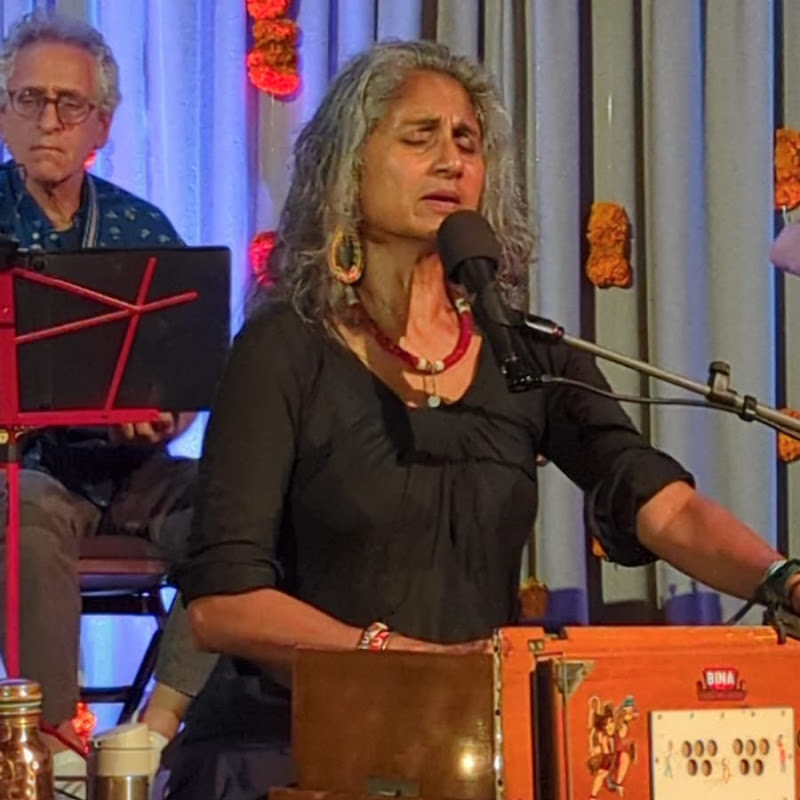
Nina Rao leads a recorded kirtan performance honoring Bhumi Devi, Mother Earth, accompanied by tabla, guitar, and multi-part vocals from family musicians. The chant celebrates the Earth as the giver of all we ask for and highlights our nature of bliss (ānanda), exploring how the divine mother provides both material sustenance and spiritual awakening. Recorded in early summer 2020 in a socially-distanced family bubble, the performance interweaves Sanskrit mantras with call-and-response singing to deepen reverence for the living planet and consciousness embedded within it.
Understanding Bhumi Devi in Hindu and Tantric Traditions
Bhumi Devi is the personified divine feminine force of the Earth herself—not merely the planet, but the conscious, giving mother who sustains all life. In Hindu and Tantric cosmology, she is one of the primary goddesses, sometimes identified with Lakshmi (goddess of abundance and nourishment) or Durga (the protective, creative force). The names invoked in the chant—"jagat ambe" (universal mother), "jagat jannani" (mother of the world)—emphasize her role as the primordial womb from which all beings emerge.
The epithet "amma ānandadāyini" translates as "mother who gives bliss" or "mother of ananda." Ananda is not mere happiness but rather the intrinsic, unchanging bliss that Hindu philosophy identifies as the deepest layer of consciousness (sat-chit-ananda: being-consciousness-bliss). By calling the Earth "ānandadāyini," the chant suggests that Bhumi Devi is not only the material provider but also the revealer of our own nature as bliss. She teaches us through her giving, her cycles, and her abundance that we too possess this blissful essence.
How Does Chanting Connect Us to the Earth's Generosity?
Kirtan—call-and-response devotional singing—is a participatory practice that creates a direct, embodied connection between the singer and the deity or principle being invoked. When Nina Rao and the ensemble chant "Sri Ma jai Ma / Bhumi Devi" (Glory to the Mother, Glory to Mother Earth), they are not simply praising an external force. The repetition, rhythm (held by Arjun Bruggeman's tabla and Brad Stoller's guitar), and the interweaving of voices create what might be called a sonic ceremony that aligns the nervous system and consciousness with the frequency of Earth itself.
The layered vocals—Uma Rao-Labrecque, Rose Stoller, and Sarina Rao joining Nina's lead—amplify this effect. Multiple voices singing together create harmonic overtones that can shift perception. The message embedded in the practice is that Earth's generosity is not transactional. She "gives us what we ask for," as described in the performance's context, but this giving operates within the logic of consciousness itself. The more we align with gratitude, reverence, and receptivity through chanting, the more we perceive the abundance that is already present.
What Does "Mother Who Gives Bliss" Mean in a Practical Context?
On the most immediate level, Bhumi Devi provides food, water, shelter, and the material foundation for life. But "ānandadāyini" points to something deeper: the Earth is a teacher of joy and resilience. She cycles through seasons, returns what appears dead to life, sustains ecosystems in balance, and continues giving regardless of human neglect or gratitude. This unconditional generosity models the quality of bliss itself—bliss is not dependent on circumstances, but rather arises from alignment with the fundamental nature of existence.
In the context of 2020, when this performance was recorded during the early pandemic and global upheaval, the chant takes on added resonance. The family-village bubble socially distanced while creating music honors both the practical reality of interdependence and the deeper spiritual truth: that we are held by something larger than our individual fears or plans. The Earth continues; the bliss inherent in existence does not require permission or ideal conditions to manifest.
How Are the Musical Elements Chosen to Support the Chant's Purpose?
The tabla (Indian percussion), played by Arjun Bruggeman, provides a steady, complex rhythmic foundation that echoes the heartbeat of the Earth itself. The tabla's tonal range—the deep resonance of the bass drum contrasted with the sharp crack of the high drum—mirrors duality resolved into unity. Brad Stoller's guitar grounds the harmonic space, bridging traditional Indian music with Western musical vocabulary in a way that reflects the global, borderless nature of Earth's gifts.
Nina Rao's harmonium—a hand-pumped keyboard instrument central to kirtan—allows her to hold the melodic line while remaining responsive to the ensemble. The female voices (Uma, Rose, and Sarina) create textural depth and represent the multiplicity of expressions through which the divine feminine manifests. No single voice dominates; instead, there is a weaving together, a recognition that the divine mother is sung into presence through many channels simultaneously.
What Is the Spiritual Function of Repetition in This Kirtan?
The chant repeats several key phrases: "Sri Ma jai Ma / Jagat Ambe Janani / Sri Ma jai Ma Bhumi Devi" and the extended section with "Dana seora"—a phrase that may represent offerings or the giving quality of Earth itself. Repetition in mantra and kirtan is not mindless; it is a technology of transformation. Each repetition creates grooves in consciousness, gradually shifting attention from the discursive, planning mind toward states of absorption and direct knowing.
With repetition comes the possibility of surrender. The rational mind, which habitually resists and categorizes, gradually relaxes. The body, held in rhythm and harmony, begins to communicate directly with the subject of devotion. Over sixteen minutes, the cumulative effect of dozens of repetitions creates an altered state of consciousness in which the boundary between singer and sung, devotee and deity, becomes permeable. This is not mystical language but a description of a verifiable psychosomatic process documented across contemplative traditions.
Why Record This Specific Performance in 2020?
The context matters: a family-village bubble in early summer 2020 captures a moment of collective uncertainty, loss, and the need to return to what sustains. The musicians chose to honor the Earth during a time when many were experiencing disconnection from normal life, economy, and social rhythms. By gathering in a safe, conscious way to sing to Bhumi Devi, they model an alternative orientation—one that prioritizes connection to the source of life itself rather than the systems built on top of it.
The production credit to Devadas Labrecque (audio and video) and the use of Tara Glazier's Abhaya Yoga studio in Brooklyn ground the performance in real community and place. This is not a polished commercial product but a documentation of practice, of a family choosing to chant together. That choice—to create sacred music during crisis—affirms the premise of the chant itself: that bliss, reverence, and connection are always available, waiting to be called forth.
How Does Understanding the Sanskrit Deepen the Practice?
The Sanskrit words are not decorative. Each term carries layers of meaning compressed through centuries of usage. "Bhumi" (earth, ground, foundation) connects to bhava (becoming, existence). "Devi" (goddess, the radiant one, the shining principle) links to diva (to shine). "Janani" (mother, she who gives birth) connects to jana (to know, to be born). These etymological connections are felt more than intellectually understood—when the body chants these syllables repeatedly, it begins to embody their meanings.
"Jai" (victory, glory, may it be so) is an affirmation and invocation combined. It is both a greeting and a request: "Glory to you" and simultaneously "Let this glory manifest." The repetition of "Jai Ma" dozens of times is not flattery of an external mother-figure but an alignment of one's own will and awareness with the principle of life-giving, conscious Earth. It is a way of saying: "I choose to recognize and celebrate this principle, and in doing so, I become more aligned with it."
Where to Go From Here
To deepen engagement with this material, consider exploring other kirtans that honor Earth, water, and the elemental principles in Hindu and yogic traditions. Listen to the performance multiple times, allowing different layers to emerge with each hearing. If you practice chanting yourself, the melodies and phrases can be learned and sung; the practice becomes embodied wisdom rather than intellectual knowledge.
Additionally, research the concept of Bhakti (devotion) in Hindu philosophy and how it serves as a path of liberation parallel to knowledge (jnana) and action (karma). Understand that honoring Bhumi Devi is not separate from ecological responsibility or social justice—reverence for Earth as sacred is the philosophical foundation from which care for the planet and all beings naturally grows. Finally, consider the role of music and collective singing in your own life: what practices ground you in connection, gratitude, and the recognition of bliss inherent in existence?